We manage, administer and innovate the railway network and thousands of railway stations across the Czech Republic. We are Správa železnic and this is a selection of the interesting things that happened on the railway in the Czech Republic in 2024.

Website in intended for the landscape device orientation.
Please rotate your device.
Rok na železnici

We manage, administer and innovate the railway network and thousands of railway stations across the Czech Republic. We are Správa železnic and this is a selection of the interesting things that happened on the railway in the Czech Republic in 2024.

Ladies and Gentlemen, Dear Business Partners,
The Czech railway network is changing before our eyes. It is no longer the reconstruction of individual stations or modernisation of particular line sections. It is a systemic, significant change on a larger conceptual level. The year 2024 was a turning point in this, all the more so because the preparation of projects that are now fundamentally shifting the railway has just reached its peak: we are switching to the European Train Control System (ETCS) on the main corridors and starting to build the first real fast railway line.
Thanks to the work completed, passengers are already enjoying the benefits of the extensive reconstruction of the Pardubice node and the connecting section to Stéblová, which is now a double track. Listed buildings in Pilsen, České Budějovice and Beroun have returned to their original beauty. A sensitive approach to renovations underlines their unique character while adapting them to contemporary needs.
But the list of completed projects is far larger. The railway station in Vsetín has been transformed into a modern transport terminal. Travel is already faster in Vysočina between Vlkov u Tišnova and Křižanov, as well as from Lanžhot to the border with Slovakia. Double-tracked line sections from Prague’s Braník Bridge (Branický most) to Spořilov and from Střelice to Zastávka u Brna increased the necessary railway capacity. Catenary wires have also been added here, taking passengers to the regional capital on modern electric units.
Prague, 28 March 2025
Jiří Svoboda Director General

'Behind each of our successes I see the professionalism and commitment of our employees. They are the guarantee that we will be able to handle the historical changes that the Czech railway network faces with flying colours.'
Jiří Svoboda Director General
'2024 was significant for the Czech railway in terms of investment construction. We built or designed a number of important constructions, some of which have been successfully completed and put in operation. For the first time in history, we announced a tender for a concessionaire for the railway to Prague Airport, which we want to finance in the form of a PPP. Preparations for high-speed lines also continued intensively.'
Mojmír Nejezchleb Statutory Deputy Director General and Deputy Director General for Infrastructure Modernisation
'In 2024, we focused our efforts on ensuring a smooth start for exclusive operation under ETCS on key corridors. At the same time, we launched a basic reconstruction system resulting in the cyclical renewal of 163 km of lines on the backbone network.'
Karel Švejda Deputy Director General for Rail Operability

'It has been another year of record financial performance for the organisation. We continue our ambitious investment programme, actively repairing, investing and improving the use of our existing assets. This has been positively reflected in a substantial increase in income from commercial space at railway stations.'
Tomáš Čoček Deputy Director General for Economics

'2024 was a year of systematic maintenance and intensive infrastructure modernisation. Despite these challenging conditions and the threat of congestion, we have managed to maintain reliable service while making significant progress in preparing for ETCS-only operation.'
Jaroslav Flegl Deputy Director General for Traffic Management

| CZK 7,5 | billion estimated costs |
| 1 000 | spots max. capacity of the adjacent P+R space |
| 110 000 | passengers a day will pass through this transport hub in the future |
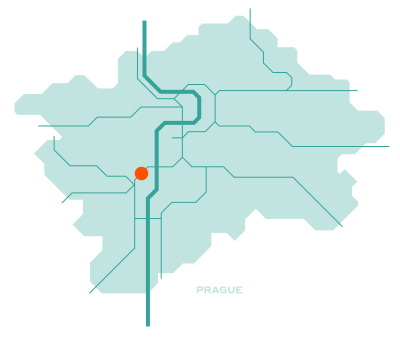
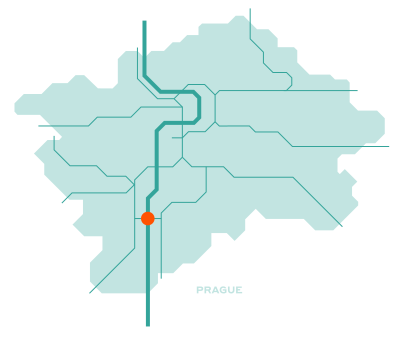
Smíchov railway station will be in near future transformed into a modern multifunctional terminal, which will serve as a transport hub connecting rail, tram, metro, pedestrian, bus, car and bicycle transport. The Smíchov terminal will provide passengers with comfortable facilities and will be connected to the surrounding area by a new tram line. It will be also part of a major transformation of the entire urban area and will connect the railway with a new development nearby. A bridging deck with a bus station will be built above the platforms, which will significantly simplify transfers to long-distance and suburban services. There will be a P+R space and capacity parking for bicycles. The platform shelter will also serve as a link between Smíchov and Radlice. The project comes from the studio of
A69 Architects.
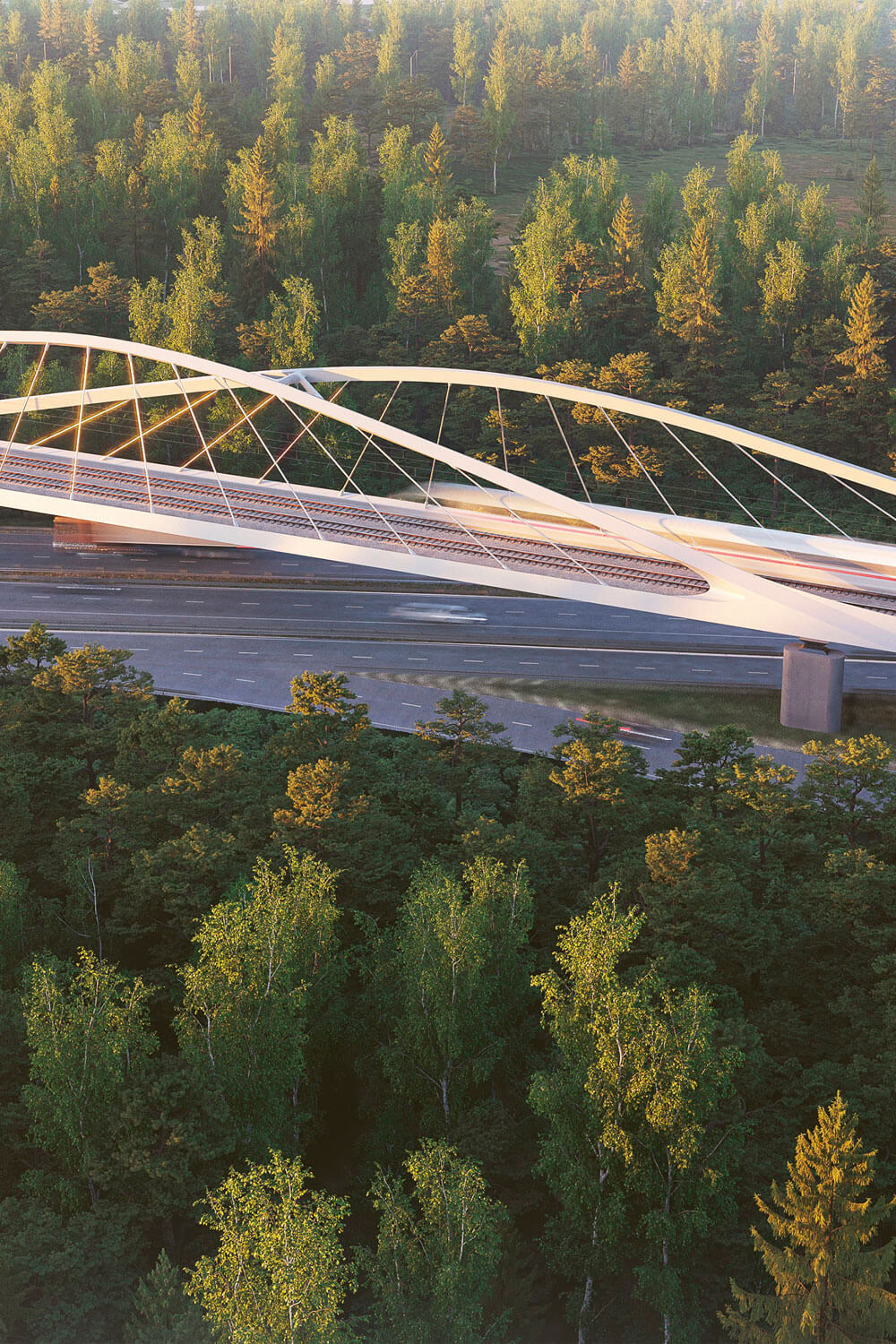
The most important projects in this strategic segment include indubitably the preparation of high-speed lines (HSL). Among other things, we are also focusing on improving the performance of selected freight lines, removing speed restrictions, digitalisation, connectivity and network development.
We ensure full operability of the railway network and are constantly working to improve operational safety. A related issue is all activities which lead to a reduction in the number of accidents and incidents on the railway network. These include the elimination of level crossings and implementation of the European Train Control System (ETCS).
Our activities play a key role in the so-called green transformation, acceleration of decarbonisation and modernisation of the entire transport and mobility system. Shifting a significant part of inland freight transport and a portion of road passenger transport from road to rail is one of the priorities of the European Green Deal. Railway transport is essential in reducing negative environmental impacts and improving the safety and health of citizens of the Czech Republic.
We always promote openness and transparent provision of up-to-date information. In addition to traditional media channels, we make extensive use of multimedia platforms and all major social networks.

The operational connectivity of the European railway system and the development of the Trans-European Transport Network are among our key strategic themes. To this end, we are taking an active approach to harmonisation of infrastructure and implementation of new technologies, especially in the area of deployment of the European Rail Traffic Management System / European Train Control System (ERTMS/ETCS) and telematics applications.
We value the work of our employees and recognise that the success of the entire organisation is based on individual people. We meet our commitments, both in terms of remuneration and provision of employee benefits, as well as training and occupational health services. We cooperate closely with trade unions.
We are involved in a number of research and development projects, primarily in the role of application guarantor. We focus primarily on areas with significant application potential and also emphasis on reducing the environmental impacts of railway operations. Our research and development activities naturally reflect current and expected trends in digitalisation and smart systems. We publish the Správa železnic science and technical journal, a platform for disseminating knowledge about latest technology and techniques.


In July 2024, we launched the Datel mobile app, where users can find all important information about the Czech railway network. Datel provides information on all passenger trains, departure boards, overview of services available at stations and details of railway constructions. There is also information on current incidents in operations. Datel is available for free on the App Store and Google Play.

| 250 × 50 | meters floorplan of the future Praha-Bubny railway station |
| 7 000 | tonnes of concrete reinforcement in total |
| 42 000 | cubic metres of concrete in total |
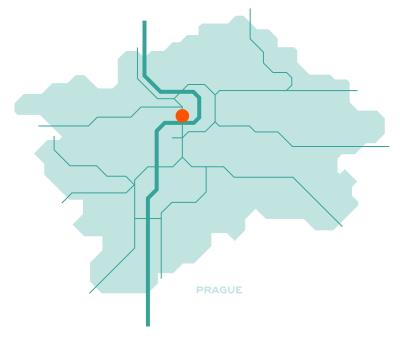
The project is part of a major investment on the Czech railway network, a modern connection between the centre of Prague, Václav Havel Airport and Kladno. The existing Praha-Bubny station will be modernised and moved closer to the Vltavská metro station, thus creating a direct transfer to the C line metro and trams.
Two elevated double-track sections will be connected to the Praha-Bubny station – one for the line in the direction of Kladno, the other for the tracks leading to Kralupy nad Vltavou. The elevated tracks will enable better access and connection of the previously divided area of Prague 7, specifically Veletržní and Dělnická streets. There will also be a new stop Praha-Výstaviště and a footbridge for access to the park Stromovka.
The project is co-financed by the European Union from the Connecting Europe Facility (CEF). The contractors are the companies Metrostav TBR, OHLA ŽS and Elektrizace železnic Praha.

| CZK 3,39 | billion total investment costs |
| 1845 | the year the station was opened |
| 2027 | the year of completion |
In January 2024, we officially launched work on the reconstruction of Praha Masarykovo nádraží (Prague Masaryk Station). It has served the railway for more than 175 years and will now undergo the biggest transformation in its history. The track facility will be covered by a unique bridging deck that will shorten access to trains from the surrounding area even as it offers a new relaxation zone in the heart of the metropolis. The station’s modern look will be appreciated by both commuters and those who take the train to the airport.
The priority of Správa železnic is to ensure the operability of railway infrastructure in the Czech Republic. We make sure that the railway is always reliably available to passengers and individual carriers. We see the railway as a platform for innovation and with each completed project we increase the overall comfort of its use. At the same time, we ensure the smooth connection of the Czech railway to the international railway network.
114 |
repair works on railway infrastructure with unit costs exceeding CZK 10 million |
CZK 1.6 |
billion investment in station buildings and related real estate at passenger stations |
620 |
km of main lines in the Czech Republic under full supervision of ETCS |
1,200 + |
km of lines with ETCS L2 |
58 |
level crossings eliminated |

Four years of demanding construction work are over. The key railway node of Pardubice station is now the pride of the main corridor. Modern platforms, a new stop and a 290-metre-long footbridge connect two parts of the city. The reconstruction of Pardubice railway station thus increases the comfort of passengers and improves the quality of life of the locals.
Footbridge over the tracks as a new distinctive feature of the station
A covered footbridge spanning the railway tracks is 290 metres long and leads to the Dukla housing estate. Local inhabitants are now better connected not just with the area in front of the station but with the individual platforms. These are directly accessible via escalators and lifts from the footbridge.
Track facility reconstruction, noise reduction and enhanced safety
Workers completely rebuilt the tracks, enabling quieter train traffic operation. In addition, the deployment of ETCS will allow the speed of the passing trains to be increased to 160 km/h. Another benefit is also the double-tracking of the section in the direction of Rosice nad Labem, which is used by trains bound for Hradec Králové and Chrudim.

Reconstruction of platforms
All platforms have been reconstructed and a new one has been added. The attractive platform shelter construction includes information system elements. New lighting, stylish benches and rubbish bins are also available on all platforms.
Trains closer to the centre
Big news for city residents and visitors is the new stop Pardubice centrum. For passengers, it will significantly reduce the walking distance to the city centre. All trains from Hradec Králové and also from Chrudim will arrive here during rush hours. The new stop consists of a 140-metre long double-sided platform equipped with two shelters.

The railway station in Františkovy Lázně is part of a protected heritage area. The entire reconstruction is thus carried out in careful compliance with the requirements of the conservationists. The work includes restoration of the historical façade and modernisation of the check-in hall and ticket offices. The project enjoyed its first success even before the work started. The expert jury for the regional construction competition Buildings for the Karlovy Vary Region granted the reconstruction an award for the best project in 2023.
The roof and facade of the station will return to their original appearance in terms of colour, materials and historical cornice work. In the interior of the building a complete renovation of floors, walls, ceilings and doors is underway. The upper floors will find use as eleven residential units.
‘The modern station building with its original appearance will serve as an example of how we should approach our historical heritage on the railway: in keeping with the beauty of the original architecture and with respect to the current needs of passengers,’ said Minister of Transport Martin Kupka.
We are maintaining the set pace of station building renovations. Work is already underway on many of them, while yet more are in various stages of preparation. Often these are historic buildings whose reconstruction must be approached with extreme care. Some examples are the stations in Klatovy, Čáslav, Jaroměř and Pilsen.
Major reconstruction in Klatovy
Plans are underway for more efficient use of interior space in the Klatovy railway station, a listed historic building. The entire station and the check-in hall will be barrier-free accessible. Both wings of the building will be completely renovated and new public toilets will be built. All interior spaces of the building will meet current requirements. Bus drivers from the planned terminal, which will be built in the station forecourt area, will also have their own facilities in the building. The works should be completed in early 2027.
Plzeň-Jižní Předměstí station: complete overhaul
Complete restoration also awaits the more than 100-year-old Plzeň-Jižní Předměstí station building, a protected heritage site. Planned work includes repairs to the roof and façade, replacement of windows and doors and adaptation of public areas. To ensure barrier-free access, we will install an elevator connecting the hall and platforms, with new public toilets on the same level. A modern information and orientation system will also be added.
The station building, designed by architect Josef Danda, represents a unique example of the Brussels style of the 1960s. Extensive reconstruction of the building from 1967 includes the restoration of exterior and interior. Construction will be conducted by the company MORYS and should be finished in 2026.
The modernisation will focus on, among other things, replacing the windows to match the original design. The interior will also be restored under the guidance of conservationists. Existing materials and artistic decor in particular will be preserved.
‘The reconstruction in Ostrava-Vítkovice is part of our long-term efforts to preserve historically significant buildings. We expect that the modernisation will not only significantly increase comfort for passengers, but also open up new possibilities for better use of the currently oversized space,’ says Jiří Svoboda, Director General of Správa železnic.

We do everything we can to ensure safety on and around the railway. You can‘t stop the train! is a joint project of several departments of the Directorate General of Správa železnic and the railway Fire Rescue Corps that aims to teach secondary school students how to behave safely around the railway. It is a 1.5-hour programme, which includes a specially created film, a presentation of the rules of safe movement around the railway, discussions with investigators and practical first aid training under the guidance of railway firefighters.

| 1964 | completion of the bridge |
| 14 | m bridge width |
| 950 | m bridge length |
This autumn we completed modernisation of the Braník Bridge (Branický most). It celebrated its sixtieth birthday with two new tracks, which had originally been envisaged at the time of its construction in 1964. Work included the renewal of the track superstructure and overhead contact line, drainage and hydro insulation system. We had to demolish part of the existing bridge structure and build a new slab and ledges. The start of operations was preceded by a load test using historic locomotives – the diesel engine Sergei and the steam engine Šlechtična (‘Noblewoman’).
Správa železnic is the largest employer in the Czech Republic in the railway transport sector. Under the banner of our organisation, thousands of people work every day to ensure that the railway network in the Czech Republic serves its purpose well. We know that the key to success is always specific people with their unique skills, expertise and commitment. In this chapter, you will have a chance to meet some of the people that make up our large and diverse team.
16,872 |
employees as of 31 December 2024 |
12,130 |
men |
4,742 |
women |
136 |
professions |
18 |
organisational parts |

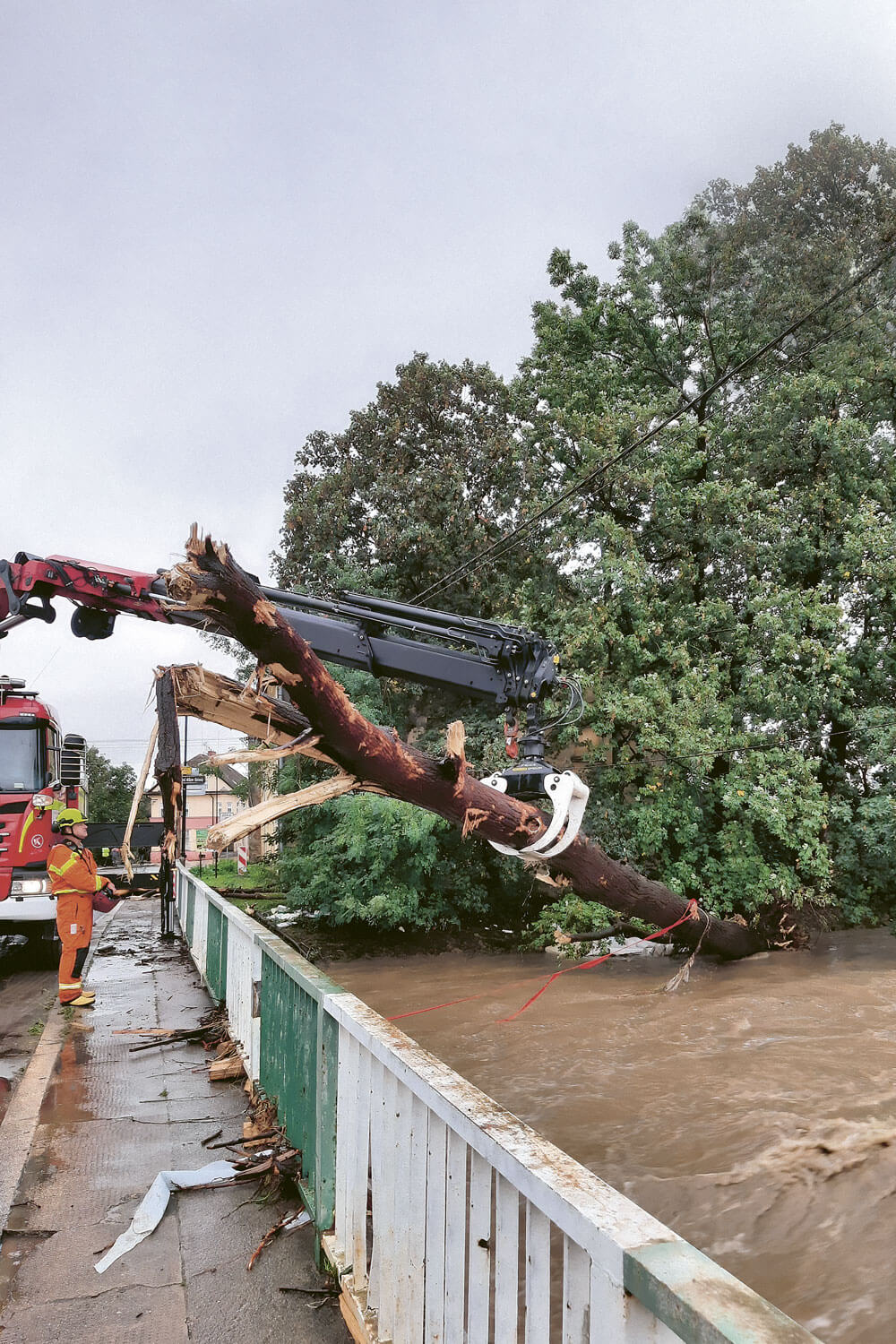
In 2024, the Czech Republic was hit by floods. They represented a serious test for many of our colleagues. Railway firefighters in particular played a key role in protecting lives and property during the crisis. Nevertheless, all of our employees who helped deal with the consequences left by the floods deserve our thanks.
In the event of any emergency, railway firefighters are always on the front line. Thanks to their special training in rescue and handling of accidents on the railway, they were able to effectively intervene where water threatened not only lines, bridges, tunnels and other infrastructure, but also key equipment vital for smooth railway operations.
The main advantage of the railway firefighters is having special vehicles at their disposal, such as salvage tanks and equipment for accessing hard-to-reach places like the on-track-off-track vehicle used in a remote area of the Jeseníky Mountains. Because of its ability to move on rails and road, the vehicle was also used to supply cut-off villages along the railway line.
Floods pose a difficult test not only for firefighters
Other organisational units of Správa železnic were also significantly involved. Where there was no direct threat of flooding, trees fell on the tracks, slopes collapsed, and catenary wires were damaged in several places. The electrical engineers, technicians, maintenance workers and other employees did their best to ensure that each interruption was as short as possible.
Most calls were concentrated in the areas of Ostrava and Jeseníky, where the situation was critical. However, the floods also affected the regions of Brno, České Budějovice, Liberec and other areas in Bohemia and Moravia.
Natural disaster recovery
As soon as the worst of the flooding passed, railway firefighters immediately set about removing silt, cleaning tunnels, and inspecting damaged tracks and bridges. A major challenge was the extraction of water from various areas of railway infrastructure, including underpasses, cable shafts, civil protection tunnels, workshops and service halls.
Our staff carefully inspected the overhead contact line and removed any obstructions that threatened them. Electrical workers, along with other colleagues, were deployed overnight to ensure a return to normal as quickly as possible. Thanks to the joint work of everyone, there were minimal train delays and rapid restoration of service on most of the affected lines.

We are proud that so many of our employees have remained loyal to Správa železnic over the years. But even so, Radek Hunal, commander of the Prague unit of the Fire Rescue Corps of Správa železnic, is an exception. Spending over three decades in one job is not the norm these days.
From an entry level position he gradually worked his way up to deputy commander of the Prague Fire Rescue Corps.
‘A good friend got me on the track to becoming a firefighter. He spent so long praising his work at every opportunity that I finally caught the bug. And I have never regretted my decision,’ he says.
In being a firefighter, he has always enjoyed the constant adrenaline. No call was the same, each situation required a different decision. Thirty years ago, firefighting equipment was relatively modest. Today the railway brigade has the most modern technology at their disposal.
In his current position, Radek Hunal performs command functions and much of his work takes place in front of a computer. He spends his free time with his children, working on building a house and listening to metal.
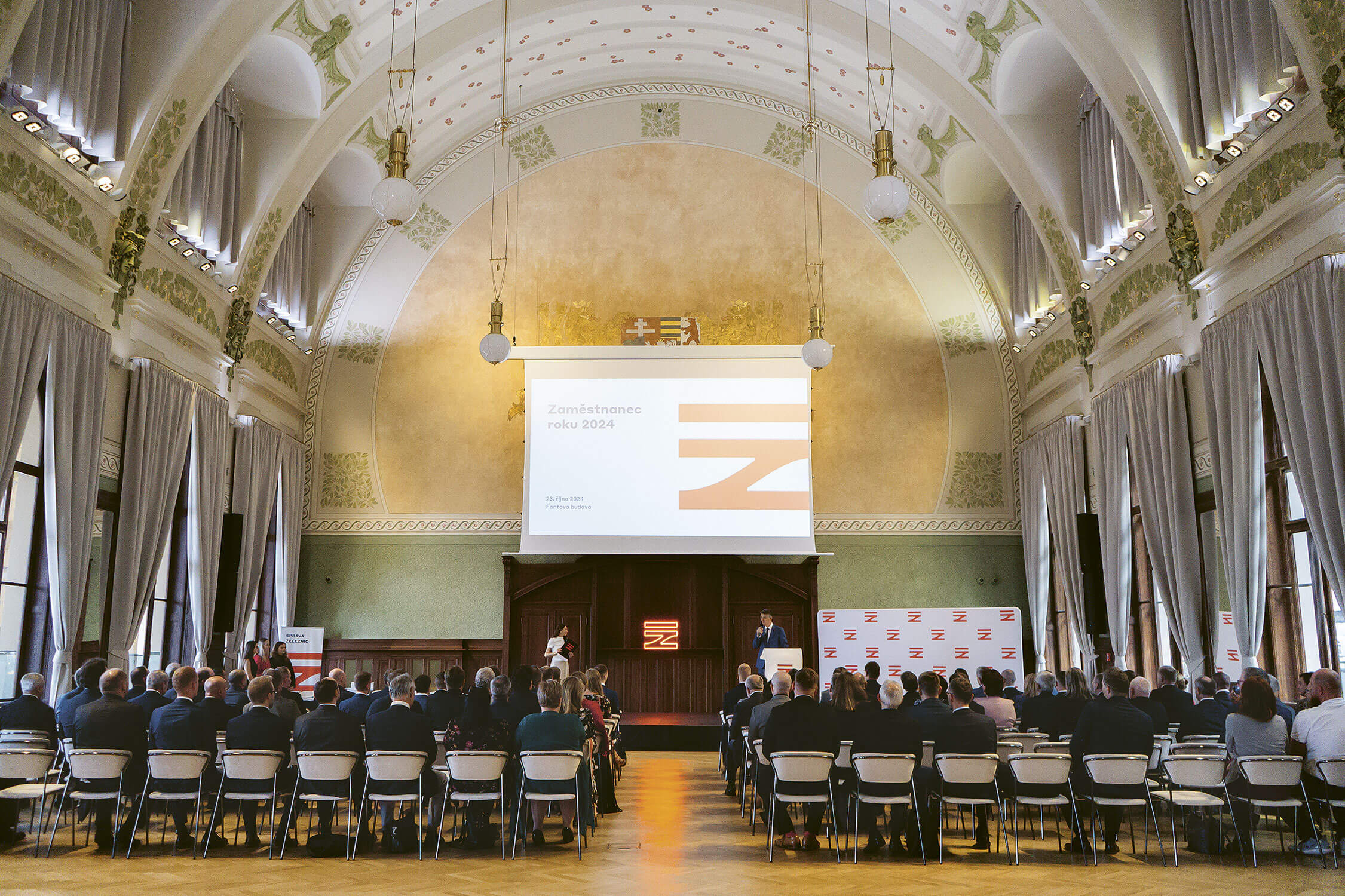
Every year we recognise those whose sacrifice, quick thinking and timely assistance helped save human life, health and property. Nine of our colleagues received the Railway Worker of the Year award this year. The stories are diverse, but they have one thing in common – a happy ending. Our colleagues earned the applause of the packed hall in the Fanta building at Prague Main Station, where the award ceremony took place.
Michal Beran, electrical engineer at the Prague Regional Directorate, kept a level head and bravely put his own health on the line to save the equipment of the traction power supply station in Čelákovice from fire.
Josef Vála, train dispatcher at the Hradec Králové Regional Directorate, used the General Stop button to prevent greater harm as
a result of an emergency situation in Česká Třebová in July.
Václav Jindra, railway firefighter from the České Budějovice Fire Rescue Corps, assisted at a crash involving a motorcycle and a truck near the Temelín nuclear power plant on his day off.
David Pošepný, shift commander from our Nymburk Fire Rescue Corps, intervened with his colleagues at an emergency in Pardubice, where an express train collided with a freight train in June. He stayed on site until the early morning hours directing rescue and salvage work.
Olga Kučerová, train dispatcher at the Ústí nad Labem Regional Directorate, noticed a truck stuck on a level crossing as she monitored the approach of a passenger train into Úpořiny station. Her quick reaction prevented a possible collision between the train and the vehicle.
Jiří Böhm, another train dispatcher, this time from the Pilsen Regional Directorate, noticed smoke coming from a passenger train at Kájov station. He immediately took up a fire extinguisher and put out the fire in the space between seats.
Jakub Rákosník and Vladan Čížek (also from Pilsen Regional Directorate) noticed while watching the arrival of a train at Volary station that the driver had failed to stop. Using the General Stop function, they stopped the train and prevented a possible emergency.
Also recognised was TCC Prague line traffic controller Marcel Omanik, who promptly used the same function to prevent a larger-scale collision involving passenger trains in the Vinohrady tunnel at the main station in Prague.
We would like to thank all awardees for their professionalism and commitment.

TereZa is mainly used for communication between the commander of the railway firefighters in the field and the dispatcher of the operation centre. The system helps to record information about the reported incident and initiate the call-out. It takes care of the automatic start of navigation in vehicles and allows the commander to report the status of the unit. Visual and voice messages allow real-time coordination of activity to remove hazards and render the railway infrastructure operational. The name of the system was created by shortening the Czech words for terrain equipment.
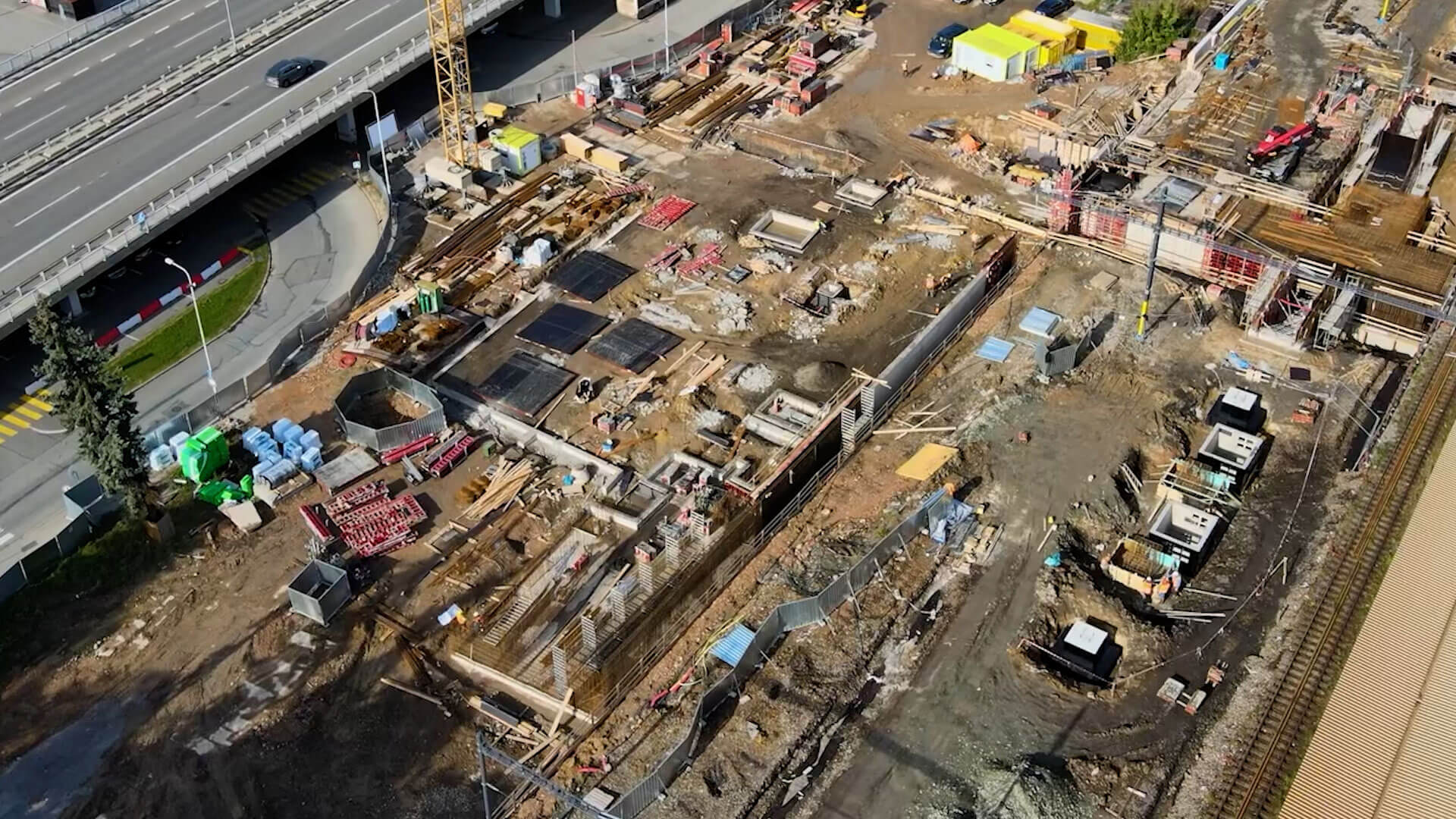
| CZK 2,9 | billion total construction costs |
| 13 | bridges to be renovated |
| 120 | km/h max. speed through the station |
The second busiest railway station in the South Moravian metropolis is undergoing complete reconstruction. The planned modernisation includes the construction of a new station building. It will also be part of the adjacent transport terminal. The reconstruction of platforms for barrier-free access and the construction of a new orientation and informational system will also contribute to greater passenger comfort. The modernisation also concerns the line tracks in the adjacent intermediate sections. This will increase line speeds up to 120 km/h, improve travel comfort and shorten train journey times. It is expected to be completed by the end of 2025.

Already in 2025, we will begin construction of the first section of the fast connections network. Teams of designers, architects, urban planners and other experts are working intensively on the final preparations. High-speed railway is a key transport platform for the 21st century. We are writing a new chapter in the history of transport in the Czech Republic and you can be there.
753 |
km of planned high-speed lines (HSL) |
CZK 0.8 |
billion for preparatory and design work for the construction of high-speed lines |
96 |
minutes journey by high-speed train between Ostrava and Prague |
351 |
km of high-speed lines already designed |
2050 |
estimated completion of the fast connections system |

In a few years’ time, construction machinery will roll into places where the new high-speed lines are planned. Currently, preparations on the sections between Brno and Břeclav and Přerov and Ostrava are furthest along.
Construction funding
The state wants to use a combination of public resources, subsidies from European funds and private capital within PPP projects to finance the construction of high-speed lines. At the moment we are finalising preparatory work for the launch of the tender for the concessionaire. The latter will then pay for the construction and the state will repay it over a set time. Representatives of the European Commission have already confirmed that the Czech HSL could tap three transport funds for financing with tens of billions of euros available. The cost of building the HSL network is currently estimated at around CZK 800 billion.
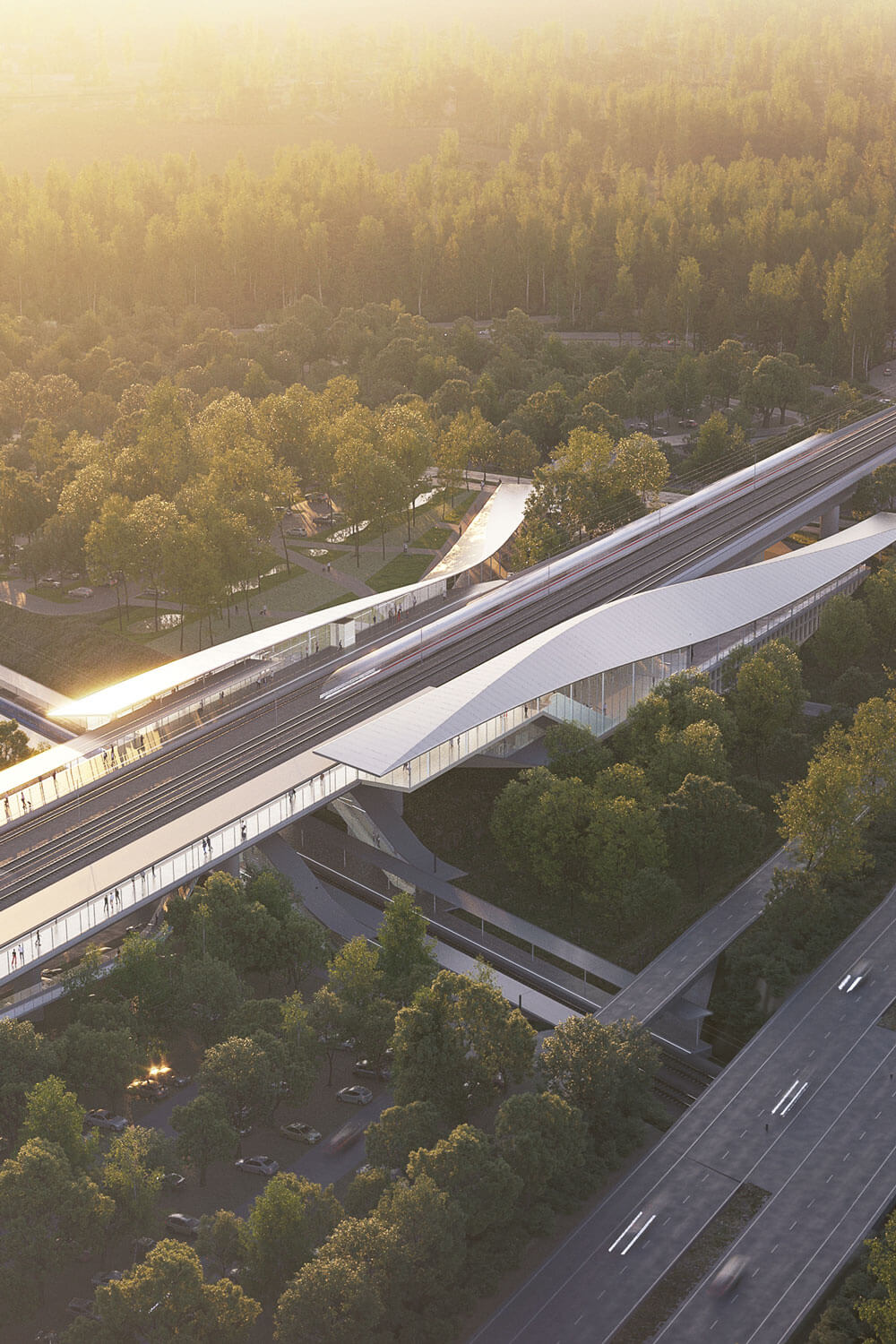
Where will the high-speed lines run
The future HSL network will consist of sections from Dresden via Ústí nad Labem to Prague, then from Prague via Brno to Ostrava and on to Poland or from Brno towards Břeclav, Bratislava and Vienna. In the future, a HSL between Prague, Hradec Králové and Wrocław in Poland and a branch line from the main Dresden line to Most are envisaged. Fast trains could also connect Prague with Pilsen and Munich.
Maximum speed of up to 320 km/h
The new lines are designed for speeds of up to 320 km/h in places, with the possibility of increasing to 350 km/h in the future. Most sections of the new HSL will be intended exclusively for passenger transport, only between Ústí nad Labem and Dresden will the new line in the Ore Mountains Tunnel be used by freight trains.
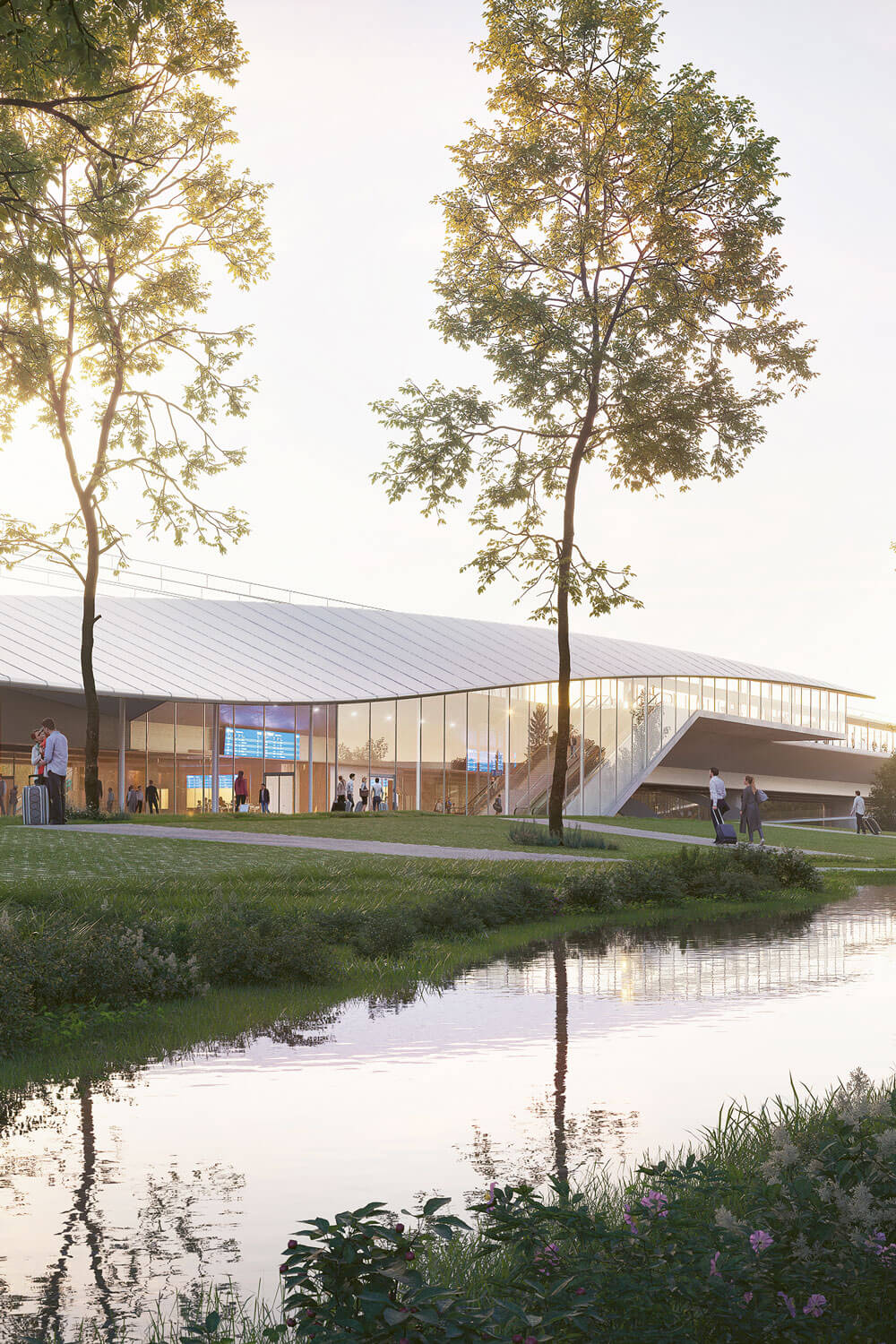
We have selected the winner of the open architectural and urban design competition for the new Jihlava VRT terminal. Out of a total of 25 proposals, the winner was from the French-Czech association AREP Architectes – monom. We will start the construction in 2029.
The jury praised the winning design for the way in which is the new transport hub of the Jihlava terminal integrated into its surroundings, taking into account the significant landscape features in the wider area. From a transport point of view, it highlights the clarity of all transfer links in the terminal and the cleverly designed bus station.
Given a projected capacity of up to 6,000 passengers per day, i.e. up to 300 passengers per hour during peak hours, the jury appreciated the quick transfer between modes of transport that the proposal addresses effectively.
As in previous cases, the Jihlava terminal will be a transfer hub between high-speed rail, public transport and other modes of transport. Fast connections will thus increase access to jobs and education while boosting regional life, fundamentally changing the general perception of distance and rurality.
Due to the exposed location of the new terminal close to the regional city and the D1 motorway, it can be assumed that after completion there will be significant development of the surrounding area, which will be reflected in the growing economic performance of the entire region. Up to 118 trains will pass through the Jihlava terminal daily. Every hour two high-speed connections will stop here, offering journey times of 52 minutes to Prague and only 36 minutes to Brno.
A new feature in the preparation of future lines is the feeling map, which we first introduced in connection with plans to build high-speed lines in Prague. The map serves to develop dialogue with citizens and stakeholders. Anyone can help influence the future form of HSL in Prague. In total, over two thousand submissions were received.
We are looking for solutions that will benefit everyone. Most of the suggestions focused on promoting valuable places, while a third highlighted specific problems of other locations. Urban planners are already working with the feedback and incorporating it into the conceptualisation of the area the new line runs through.
The project in Prague includes a new construction of tracks from Běchovice to Zahradní Město and then to the main railway station and the completion of a fourth track between Běchovice and Libeň. In Prague 10, for example, most of the public‘s suggestions concerned the expected greenway, or railway promenade, which would replace the railway tracks eliminated in Strašnice. People expect the promenade to provide a new pedestrian zone with bicycle connections and revitalisation of neglected areas.
Citizens from Prague 15, on the other hand, overwhelmingly pointed out the unique character of the Triangl wetlands. Residents of Dolní Počernice expressed their opinions mainly on the new train stop in Hostavice, move of the platforms in Dolní Počernice closer to the centre of the town or the accessibility improvement of the stop in Jahodnice. In Libeň, citizens highlighted the off-putting environment of the railway station and the considerable obstacles for pedestrians.
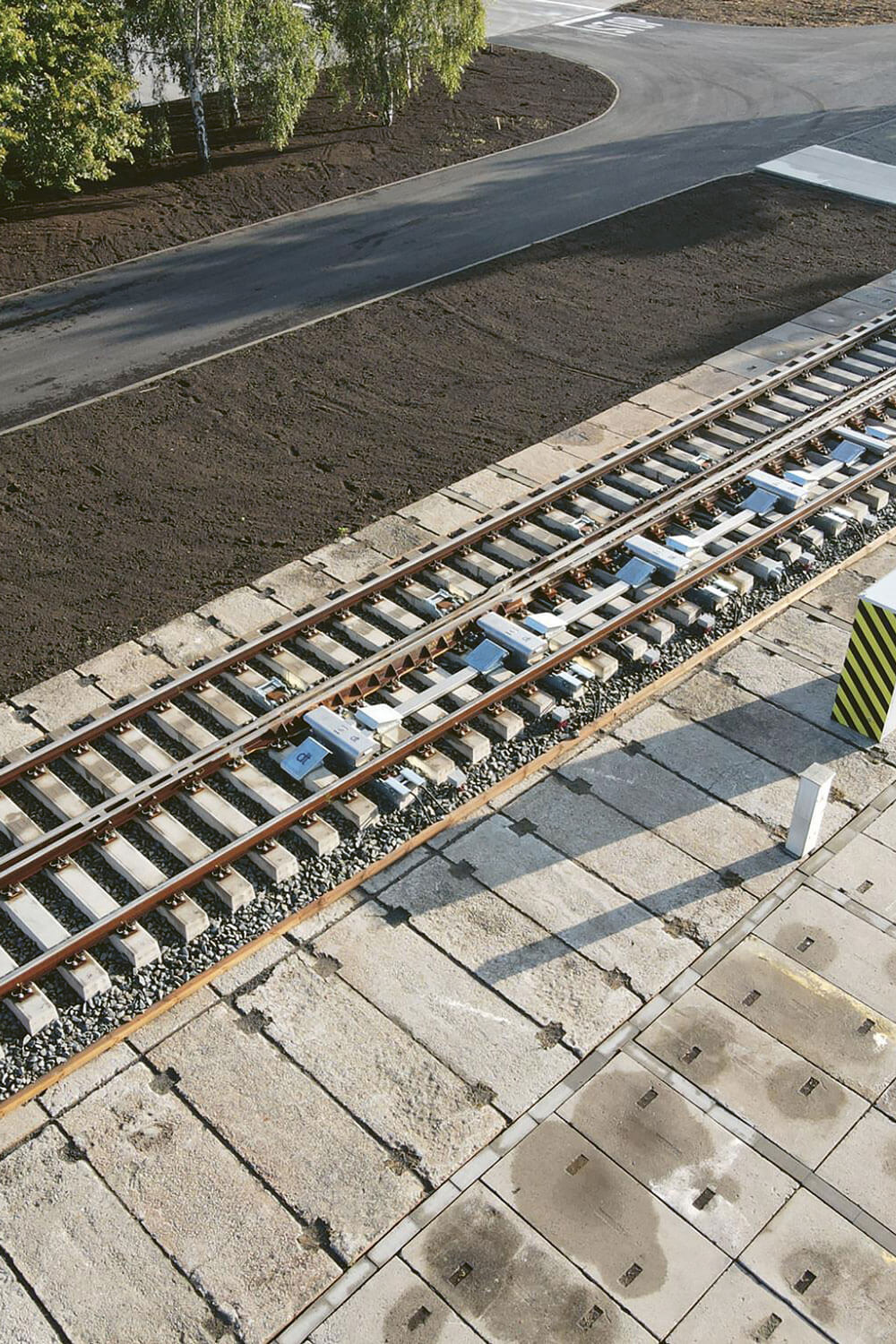
350 |
km/h max. speed of trains running through |
230 |
km/h max. speed when changing to another track |

A presentation of a turnout for the future Czech high-speed railway took place in the premises of the company DT – Výhybkárna a strojírna in Prostějov. The turnout is the result of the company‘s own development and enables trains to run through at 350 km/h and 230 km/h when changing to another track. Products from the Prostějov turnout manufacturer are used on corridor lines, where they contribute to expediting the operation.

This is a mobile information centre that travels the entire Czech Republic and presents the preparation of high-speed lines (known in Czech as VRT) to the public. It is a thirteen-metre-long set which, including the towing automobile, covers an area of almost 15 × 5 metres when the trailer is folded out. The VRTmobil is equipped with audiovisual equipment, promotional materials available to visitors, and also facilities for discussion with experts participating in the individual roadshows.

| +-10 000 | weekday capacity of the Hranice terminal by 2050 according to the feasibility study |
| 11 | competition proposals evaluated in total |
| 18 | minutes journey time from Hranice to Ostrava by high-speed train |
In 2024, a competition was held for an architectural and urban design for a new railway station at Hranice na Moravě. The winner of the competition was the Swiss-Czech consortium Nemec Taller Architektur. The current station building will be replaced by a multifunctional terminal, which will serve as a transfer hub for the city of Hranice and its surroundings. It will also integrate the functions of the existing station, HSL terminal and bus terminal, and offer parking space for commuters travelling by car. The terminal will be used for long-distance transport within the Czech Republic and abroad as well as for daily commuting to Olomouc, Ostrava, Brno and Prague.
The pillar of all our activities is the observance of the utmost consideration for environmental protection and respect for the social values of our civilisation. We are pleased to again share a few examples that illustrate the building blocks of our approach.
7 x |
lower energy consumption on high-speed lines compared to passenger cars (for the transport of 1 passenger per 1 km) |
27 |
sites where the first wave of photovoltaic power plant (PVPP) installation was completed |
300 |
buildings selected for PVPP installation in future funding waves |

At the end of 2023, 60 % of all mainline stations had wheelchair access to the platform, and 68 % to station buildings. The implementation of ongoing and planned construction projects will increase the proportion of barrier-free buildings to 72 % and barrier-free platforms to 79 % by 2028.
Správa železnic’s new lifting platforms are already serving passengers in wheelchairs at dozens of other locations. Assistance service, which helps people with reduced mobility and orientation to get from the station forecourt to the train, is becoming increasingly popular. In fact, over 19,000 people used this service in 2023 alone. By reconstructing a significant number of station buildings, we have successfully eliminated obstacles in the form of stairs. For new buildings, barrier-free accessibility is a matter of course.

In 2023, we used 7 % less electricity than the previous year, and 14 % less gas. Total year-on-year savings amounted to CZK 130 million.
Savings have also been achieved by changing the way we purchase energy, where part of it is purchased at a fixed rate and the rest at the spot price on the daily electricity market. However, this would not have been possible without a number of other measures, including the modernisation of signalling equipment, regulation of switch heating and installation of photovoltaic panels on selected buildings and land.
Plzeňská správa mostů a tunelů (Pilsen´s bridge and tunnel maintenance division) was the first in the Czech Republic to use bridge girders made of polymer. This was in the repair of a bridge near Černý Kříž in Šumava. The bridge is located at km 82.887 in the section Nová Pec – Černý Kříž and spans the Hučina stream. In addition to the 13 polymer bridge piers, 20 sleepers of the same material will be inserted into the bridge transition areas. The material is an eco-friendly one made of fibre-reinforced polyolefins. Life expectancy exceeds 50 years.

The year has come and gone, and employees of the Pilsen Regional Directorate have again swapped their offices for a forest and set off to plant trees. On a beautiful autumn day, 5,500 pine trees, 500 linden trees, 250 beech trees and 250 fir trees were planted in the forest. The planting took place for the fourth time thanks to the excellent cooperation with Lesy ČR (Forests of the Czech Republic).

The legacy of railway architecture has been given a completely new dimension in Řevnice, Central Bohemia. The station building, built in the Romantic style in 1870, was originally designed by architect Ignác Řechka (1821–1886). After the construction of a new station in 1895, the original building was long used for residential purposes. Between 2017 and 2018, the dilapidated building was renovated into a microbrewery with a restaurant and accommodation. The reconstruction, designed by architect Tomáš Šantavý, won recognition in the 2020 Building of the Year competition for the Central Bohemian Region.